

I had the pleasure of attending the "An In Depth Exploration of Chronic Illness" on March 8, 2025. The event was hosted by Neil Nathan, MD and Jill Crista, ND and had an amazing lineup of leading-edge speakers discussing chronic illness.
Disclaimer: Nothing in this text is intended to serve as medical advice. All medical decisions should be made only with the guidance of your own personal licensed medical authority.
Disclaimer: This information was taken as notes during the training course and may not represent the exact statements of the speakers. Errors and/or omissions may be present.
Note: As this information may be updated as any errors are found, I kindly request that you link to this single source of information rather than copying the content below. If any updates or corrections are made, this will help to ensure that anyone reading this is getting the most current and accurate information available.
 Kristine Profeta-Gedroic, MD spoke on “Parasite, Immune Regulation and MCAS” and shared:
- Since COVID, more and more MCAS-related pathologies observed; parasites are a major cause if not the root cause
- Symptoms: dissociative thoughts, aggression, rage, headaches, worse at full moon, oral rashes, bruxism, digestive symptoms, liver pain, fecal urgency, loose stools, anal itching, rashes and histamine reactions, insomnia, frequent waking, night terrors, restless legs
- Can experience actual movement in the liver and GI tract from the parasites
- Sent worms to a lab five times and were all negative; false negatives are common in parasitology
- Types: protozoan, nematodes, trematodes, cestodes
- Nematodes: roundworm, whipworm, hookworm, pinworm or threadworm, Strongyloidiasis
- Cestodes: tapeworm
- Trematodes: liver fluke, Schistosoma
- Liver flukes are very persistent and high prevalence in chronic Lyme
- Those with Lyme who traveled internationally or lived on farms where the hardest to recover; later understood this was related to parasitic burden
- NK cells may have both innate and adaptive immunity properties
- IL-4 and IL-13 are the primary Th2 interleukins
- IL-10 is anti-inflammatory and leads to macrophages eating cellular debris
- Pro-inflammatory cytokines are critical to host defense but can cause extensive damage to the host
- COVID turned on Th17 and loss of control of Th2 leading to over-population of parasitic presence and to autoimmune pathologies
- Chitin is present in fungi and parasites but not in humans
- Inflammation is wonderful but not when it goes on for too long and leads to chronic illness
- Elevated monocytes suggest a high demand for tissue-resident macrophages to be called out of the bone marrow
- Macrophage stages: recruitment to tissues -> differentiation and activation in situ -> conversion to suppressive cells -> restoration of tissue homeostasis
- Macrophages are a dump truck to pick up dead tissues from the scene of the crime
- IL-4 and IL-13 stimulate a “weep and sweep” response in the body to address parasites
- Chitin has a charge which draws metals and positively charged elements to the shell
- Toxins and heavy metals dump after detoxing mold or parasites
- Heavy metals are bound to fungal and parasitic fractions in patients
- Have to address fungal and parasitic issues before realistically looking at heavy metals
- Unlike bacteria, protozoa, fungi, and viruses, helminths do not replicate in the mammalian host (debated)
- “Weep and Sweep” response aims to slow down worm vitality and impose death
- Trying to kill helminths like smaller organisms negatively impacts the human host
- Coinfections do not have to be only those that come from Lyme; patients can acquire helminth infections that is a setup for a suboptimal immune response to later infection with other bacteria; due to the Th2 response being turned on from the parasite infection
- Th2 downregulates Th1 which is very important for chronically infected patients
- Body makes a granuloma to protect itself from something that is unable to be removed
- The body doesn’t do silly things; it only does really smart things; our job is to figure out why it is doing what it is doing
- Might MCAS, eosinophilic esophagitis, eosinophilic colitis, granulomatous disease like Sarcoid, and collagenous colitis be undiagnosed parasitic infections?
- We do not have any reliable parasite testing today
- Most patients have chronic inflammatory reactions for as long as decades; need to re-regulate the microbiome and the immunology in a different manner than an acute parasitic infection
- Chronic bacterial and viral infections are weighed down with too much requirement for Th2 immunity due to parasitic presence
- Consider treatment of parasites for all patients with chronic infection, allergy, and MCAS
- The stool is never going to give us the answer when it comes to parasites
- A negative parasite test should not be proof of absence
- Nematodes can be supported with Ivermectin and Albendazole; Cestodes with Praziquantel; Flukes with twice daily Praziquantel; protozoan with Nitazoxanide
- Sees TGFb1 elevations with parasites; deworming can lower TGFb1; need to look at mold along with parasite issues; follows TGFb1 less with recent changes in lab methodologies; sees very high elevations
- Crista mentioned Chaetoglobosin will reduce TGFb1
- Eggs can hatch and grow within the host; research is not entirely clear
- Crista does see parasites as part of hypermobility and EDS; collagen formation is part of the parasite immune response
- Crista mentioned that snake venom degrades collagen; need to get spike proteins out as well as treating parasites
- Uses the LabCorp cytokine panel and finds that it provides helpful insights
Kristine Profeta-Gedroic, MD spoke on “Mycobiome Dysbiosis – A Whole New Root Cause” and shared:
- Microbiome is impacted by geography, age, diet, genetics, breast feeding vs. formula-fed, vertical transmission, medications
- Negative side effects of medications may be due to an unknown microbiome
- More than 1500 bacterial species but 99% are from around 30-40 species
- Bactria make up 60% of fecal dry mass
- Most dominant phyla: Firmicutes, Bacteroidetes, Actinobacteria, Proteobacteria
- Most common: Bacteroides, Clostridium, Peptococcus, Bifidobacterium, Eubacterium, Ruminococcus, Faecalibacterium, Peptostreptococcus
- We don’t know some of the organisms that have been lost from our modern microbiome
- The microbiome synthesizes a lot of vitamins
- Neurotransmitters are produced by the microbiota
- SCFAs increase production of tight junction proteins
- Unwanted compounds like LPS can cross the blood-brain barrier and activate neurons
- Constantly being in fight or flight will impact the ability to move the microbiome towards health; need to get amygdala and limbic system to stop firing
- The gut controls everything
- Keystone strains: required to keep the microbiome in balance; without keystone strains, the ecosystem would be dramatically different or cease to exist
- Antibiotics can change metabolism and may never be the same after
- Small numbers but critical to support other healthy bacteria
- Keystones
- Akkermansia – can lead to inflamed mucosal surface if not present; weight, cholesterol, blood sugar; higher Akkermansia leads to healthier metabolism
- Faecalibacterium Prausnitzii – prevents toxins and undigested foods from escaping from the gut into the bloodstream; both high and low levels can have different pathologies; Psoriasis is more autoimmune; eczema is more an overflow state of the gut; high F. prau seen in a lot of patients today that may be a compensation for inflammation resulting from COVID
- Bifidobacteria – produces butyrate and supports immune system; higher levels lead to better responses to vaccines; butyrate does just about everything we want in the body
- The microbiome creates butyrate, propionate, Indole, Indole-3-aldehyde, Indole-3-propionate; wide-ranging health benefits; the gut plays a significant role in overall health
- Best microbiome has significant alpha diversity; we do not want a monoculture; often seen in significant disease states
- Firmicutes:Bacteroidetes Ratio: Firmicutes dominant is from unhealthy carbs
- Proteobacteria:Actinobacteria: Proteobacteria increase metabolic disorders and dysbiosis; lower Proteo and higher Actino is favorable
- Prevotella:Bacteroidetes: lower is reduced BMI and inflammation; Prevotella is not optimal
- Firmicutes is a mixed phylum; not all bad; depends on which carbs are encouraging the growth
- ME/CFS patients have significant GI dysbiosis; deficient butyrate production associated with bacterial network disturbances and fatigue
- We have mold and fungi in our gut; the mycobiome; we do live with mold
- The microbiome is similar to the macrobiome in the outside world
- The healthier our gut, the less fungal overgrowth we will have
- Chemicals, WiFi, etc. stimulate mold and lead to serious biome issues
- Environmental molds get into the gut and people move their molds with them
- Candida loves to host Strep; treat Candida to dismantle Strep
- Lyme is antagonistic to the gut; serious spikes in Candida symptoms; a lot of “chronic Lyme” is Candida and other molds in the mycobiome
- Mold layer is tied into the brain and autonomic nervous system
- Molds are the alarm system; mushrooms tell the trees that the forest is invaded by insects; mold in us senses the environment to be hostile or safe; signals to all cells in the body through the ANS
- Hard to get a mold patient controlled if you can’t get the limbic system to stop firing
- Most common genera are Saccharomyces, Candida, Cladosporium, and Penicillium
- Up to 75 genera of fungi identified in stool
- Fungi are a major part of our health and the aging process
- Lose immunity over time from parasite presence and this leads to fungi and aging of the brain; need to deworm
- Molds and the mycobiome are a root cause of disease; virtually all autoimmune disease; molds control Th17 pathway
- Molds produce mycotoxins which are poisons to different organ systems
- Specific molds are associated with conditions such as liver disease, IBD, Crohn’s, Cystic Fibrosis, Lung disease, COPD, nosocomial blood infections, vaginal infections, meningitis, oral infections, neurological infections, autism, Schizophrenia
- Addressing molds leads to an increase in mycotoxins initially
- Molds produce thick biofilms such that there is almost no room for food to go by; Beyond Balance BFM-1 or BFM-P may be helpful
- They give a lot of Saccharomyces boulardii
- Probiotics compete with pathogens, modulate the immune system, and inhibit bacterial toxin production
 Bob Mozayeni, MD spoke on “New tools and concepts for evaluating the triggers and drivers of persistent inflammation: RNA FISH microscopy for Lyme-related diseases and the intersection with SARS CoV2Conference” and shared:
- Working on developing HLA gene therapies for autoimmune diseases
- COVID associated with blood clots for 6-12 months
- New objectives in today’s microscopes make the technology much more powerful
- Can gain insights into microbial metabolism as well as presence
- Can start with a genus probe and then get more specific around species after casting a broad net
- Trigger + terrain = symptoms resulting from inflammation, autoimmunity, neurotransmitters, neuropsych, stress/trauma/PTSD; feedback loops perpetuate
- Evaluate all processes potentially contribution and address all aspects
- We are in the era of persister infections
- Bartonella division time is slow at 22-24 hours
- Can get into any cell
- Can have Bartonella infected red cell next to a red cell that is not infected
- Far bigger than ticks; cats, cat scratches (feces of flea under skin); cats not infested with fleas are still likely to be infected with Bartonella; other insects
- Bartonella in ticks has been controversial; with more sensitive PCR testing; not that it is not there, but likely not detectable
- Negative PCR result does not rule out infection
- Bartonella has been found in dust mites; could be immunized with Bartonella from dust mite allergen extracts
- Bartonella tracks often diagnosed as stretch marks
- Can infect lymphatics and glymphatics/glial cells
- Skin -> lymph -> vascular -> endothelium -> RBC
- Borrelia Western Blot wit IgM positive could be from Bartonella; think Bartonella with IgM Western Blot
- Failure of Lyme treatment is usually not Borrelia
- Can have any symptom
- Suppresses the immune system; may have no detectable antibodies for several months into treatment
- Impacts many system; broad functional medicine is needed
- If IFA-positive for Bartonella, C4a can be higher
- Has features of small vessel disease
- Asymmetric fluctuating symptoms more vascular than myelin related
- Has seen associations with MS
- Bartonella can contribute to many neuropsych symptoms
- Can be a trigger for PANS
- Statins work by vasodilation and NO potentiator
- Atherosclerosis is a biofilm with many infections
- Bartonella has a biofilm
- Infected red cells often clump together due to biofilm formation
- PANS and PANDAS patients have much more biofilm than chronically ill adults; may reflect a low antioxidant diet
- Relied on lumbrokinase to break through biofilm; not just fibrin; ZDNA prevalent in these microbes and resistant to our normal DNAses
- Biofilms develop on IV catheter surfaces; not a supporter of IV antibiotic therapy
- Bartonella and Babesia are seen together almost 100% of the time
- Could osteoarthritis be the result of Bartonella?
- Bartonella track biopsies show damaged elasticity patterns
- Bartonella tracks can be associated with neuropsychiatric symptoms
- Redness of tracks goes away within a few months of treatment and fades into the background
- Has seen patients with Bartonella that developed EDS which resolved with treatment
- Lymphatic dysfunction with Bartonella can occur with the glymphatic system as well impacting the brain; may be a reason for neuropsych involvement
- Testing can show infection is gone (healthy carrier) but patient may think infection is still there because they have some ongoing symptoms that may require other types of therapies
- Bartonella may have some links to potential cancers; Neil Spector’s work; Bartonella and breast cells are a stimulator of oncogenes
- One dermatologist found evidence of Bartonella in melanoma; 7 of 8 were positive for Bartonella by either serology or PCR
- Bartonella increases VEGF-C which is a melanoma growth factor
- COVID Spike Protein mRNA FISH probe was localized to platelets, WBC, RBC, and biofilms
- Has seen Bartonella recurrences immediately following COVID
- Some Long COVID patients may have relapsed Bartonella
- Having Bartonella in the first place may be a risk factor for Long COVID
- EBV may be relapsing as well after COVID
- All protocols have room for improvement
- Microscopy shows when treatment works or does not work
- Microbes may persist
- Intercurrent viral infections may cause relapses of vector borne infections
- SARS-CoV2 may explain hypercoagulability
- Not detected result is not the same as a negative; likes 3 consecutive not detected results
- Moves from antibiotics to herbal antimicrobials
- Immunological testing is a functional marker of immune response and not a diagnostic tool for an infection; looking for IgM in a chronically ill patient is not a good way to explore infection potential
- Antibiotics are bacteriostatic not bactericidal
- Treatment can be difficult due to rebound inflammation, MCAS, etc.
- Allicin, liposomal oregano, and CurcuPlex worked very well for one patient
- Rifabutin can inhibit both Bartonella and Babesia
- 25-30% since pandemic have issues with uveitis with Rifabutin
- Recent pattern: Azithromycin or Clarithromycin in combination with Rifampin
- Beware of CYP systems and metabolism of sterol hormones such as cortisol with Clarithromycin / Rifampin
- Uveitis is likely due to Bartonella die-off in the eye
- Elevated LFTs and neutropenia are common and normalize with treatment but need monitoring
- Must do baseline with ophthalmologist for Rifabutin
- Spike protein seen for up to 5 months in patients with pre-existing infections
- Aspirin may have a role post-COVID
- Long COVID may be a relapse of bacteria or hypercoagulation
- Bartonella relapses are seen in COVID but responds to shorter course of treatment
- Has not seen one patient in his practice with heart attack or stroke; often caused by chronic infections
- Developed a nerve fiber demyelinating imaging and nerve density assessment
- Patients with demyelinating neuropathies often have pain
- They are working to understand if there may be infections such as Bartonella nearby
- PCR testing is problematic; improvements are coming
- Their probe is Bartonella henselae but seems to cross reaction and likely finds others
- Selects herbs found in the diet such as allicin, oregano, turmeric
- Does not find VEGF testing helpful for aiding Bartonella diagnosis; levels fluctuate and it would require many tests and looking at patterns
- Rifabutin penetrates tissue 50 times better than Rifampin but is too potent to use as a first line agent
- Rifampin leads to tan skin; Rifabutin looks more orange
- Has not seen uveitis with Rifampin; does not penetrate as well
- Link between EDS and MCAS; Bartonella/Babesia are together in almost 100% of cases; Babesia is a primary cause of MCAS
- Incompetent ileocecal valve in hypermobility cases may lead to SIBO; high amounts of mast cells in small intestine
- Has not used methylene blue as an antimicrobial
- Has not seen fundamental changes in lab findings; more inflammation
- May be seeing more microplastics over time
- Ideal to test yearly for those who have recovered and then potentially do some herbal treatments
- May use Ivermectin and Primaquine or Tafenoquine for Babesia
 Bruce Patterson, MD spoke on “Non-Replicative Pathogen Persistence in Monocytes as a Mechanism for Chronic Lyme” and shared:
- The monocyte subsets are the human garbage cans
- Monocyte activation leads to a profound innate immune response
- 158 biomarkers that they looked at with machine learning and AI
- Long COVID impacts 20-30 million Americans
- 7 trillion dollar problem; as important to say who doesn’t have it as who does have it
- Vascular inflammation caused by persistence of S1 portion of spike protein remains months and years after infection
- Need to separate conditions with similar symptoms as they are treated differently
- Borrelia lipoproteins create an innate immune response with pro-inflammatory cytokines
- Heat killed spirochetes induces a stronger pro-inflammatory response than live infection
- Long COVID is not caused by replicating virus
- Cannot differentiate between virus from 4 years ago vs. 1 week ago
- Acute COVID may lead to reactivation of chronic herpes family of viruses and replication of Lyme organisms and coinfections that are undiagnosed or inadequately treated
- Sees joint and muscle pain more in chronic Lyme than in Long COVID
- Found S1 and S2 in non-classical monocytes in people that never had COVID but had only vaccination
- You don’t need SARS-CoV2 replication to have Long COVID
- Not a single study that has demonstrated that Long COVID is replication competent
- 14 cytokines gives you 89 billion different combinations; Long Haul panel
- Will be looking at mold and other inflammatory triggers
- Use machine learning with over 50,000 patients to discover drugs; that is what led to Maraviroc and statin combination protocol
- Will work on a cocktail for chronic Lyme, Long Vax, and ME/CFS
- ME/CFS may be as many as 5 different diseases being lumped together in 1
- SCD40L, CCL5, and VEGF are vascular inflammation markers
- Vascular inflammation causes vasodilatation and many symptoms observed
- Chronic Lyme
- IL-13 elevation + IFN-y elevation
- IL-8 elevation + IFN-y elevation
- Long Haul Index > 6
- Between 0.7 and 6 is Long COVID
- 89% sensitive and 99% specific for Lyme
- Has seen Long Haul Index up to 147
- Rarely see CCL5 or RANTES in ME/CFS
- ME/CFS and long COVID are not the same
- ME/CFS and Lyme are not the same
- Lyme and Long COVID are not the same
- ME/CFS is a group of symptoms that represents a conglomerate of post infectious etiologies
- Acute COVID with S1 in monocytes may be those that go on to have Long COVID; still unknown
- 80-90% of Long COVID have mild disease; very few that had serious disease developed long COVID
- They do not find the whole genome of SARS-CoV2; not replication competent
- You do not need replicating virus to cause the pathology of Long COVID
- Nothing convincing that he has seen that supports replicating virus in Long COVID
- Monocytes involved in HIV, SARS-CoV2, HCV, Zika, Dengue, West Nile
- Classical monocytes to no have inflammatory attributes; non-classical do
- Every Long COVID patient has elevated VEGF
- Hot / cold sensitivity is a window into the state of the blood vessels; common complaint
- Fractalkines involved in vascular inflammation
- IL-2 + IFNy is the numerator for their Long Hauler Index
- Statins downregulate fractalkines
- Non-classical monocytes are long-lived; if they have payload it is much longer than the commonly understood week; want these cells to die
- Radiance has an assay for S1 in monocytes
- Pathogenesis of spike is greater when carried to blood vessels by a shuttle bus
- Symptoms are vasodilatation and vascular inflammation
- See fragments of Lyme in monocytes in chronic Lyme; not full length bacteria
- Long COVID and Lyme approach is to empty garbage can
- Repolarize pro-inflammatory monocytes with CCR5 blockade
- Block CCL5 with Maraviroc
- Atorvastatin lowers CD40L and fractalkines
- High IL-2 and TNF-alpha associated with fatigue
- They cannot find people who have not had COVID at this point
- Can find viral replication out to 3 months; chances are nil after 3 months
- COVID vaccines don’t prevent infection
- An additional bolus of S1 has risks that outweigh partial protection benefits
- 1/4 of dose of statin used for cholesterol for only 6-12 weeks
- Very little atherosclerotic disease before the 1918 Flu epidemic
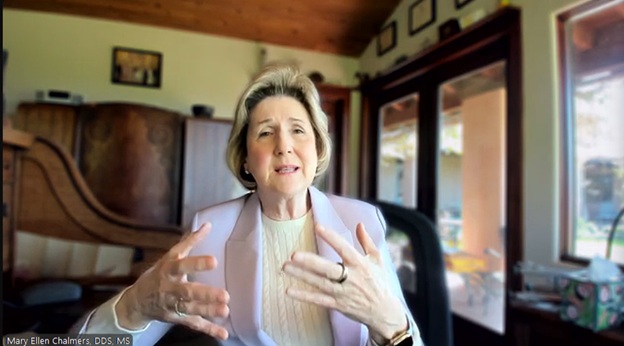 Mary Ellen S. Chalmers, DMD spoke on “Integrating the Oral Systemic Connection to Improve Medical Outcomes” and shared:
- Dentistry contributes to complex, chronic illness
- Functional medicine brings a template for personalized care that includes the oral cavity
- Oral disease impacts every area of the body
- Standard American Dentistry can be an antecedent or trigger for chronic disease
- Periodontal disease and dental caries are the two most common diseases worldwide
- Toxins from the oral cavity are triggers and lead to chronic disease
- Sources: metals, plastics, infections, oral health products (toxins), mechanisms
- Amalgams largely replaced by composite fillings; majority contain plastics
- Night guards and retainers can be a source of plastic
- Clear plastic aligners are not as dangerous as acrylic resin mouthpieces
- Fluoride has toxic effects that are dose dependent; damages mitochondria
- Different metals and saliva create ions that are absorbed and contribute to autoimmunity
- Nickel allergy can be as high as 20% of the population
- FDA changed amalgam recommendations and identified who should not have amalgams or who should have them removed
- More amalgams, larger amalgams -> higher blood mercury levels
- Same was not identified with composites and BPA
- Heavy metals impact the intestinal microbiome and impact the gut flora
- Mercury has a double bond with glutathione and will lead to glutathione depletion
- Mercury induces mitochondrial dysfunction
- Genetics play a role; ApoE4 has lowered ability to detoxify mercury; ApoE2 has highest detox capacity
- Need particular care with removing metals in those with ApoE4
- Oral toxicity can dysregulate microglia
- Periodontal pathogens invade the trigeminal ganglion
- Infections lead to endothelial damage
- Understanding of infections in root canals is growing
- Cavitations are evaluated with CBCT in all chronically ill patients
- Cavitations can be related to infection, vascularity, and low Vitamin D
- A healthy microbiome is in homeostasis with our immune system
- Different areas in the mouth have different microbial communities
- Periodontal disease is a systemic disease that originates in the mouth
- Periodontal disease lead to atherosclerosis
- Results in bacteremia and endotoxemia
- Periodontitis correlated with Type II diabetes
- The oral microbiome plays a role in IBD
- Has a role in Rheumatoid Arthritis
- 3-fold risk of development of Alzheimer’s with P. gingivalis
- Local treatment may not be adequate for pathogenic organisms
- MyPerioPath / Oral DNA Labs test run on every patient
- Apical Periodontitis is an infected root canal tooth; silent infections trigger both innate and adaptive immune responses
- We rely on our natural teeth to stimulate the hippocampus and directly impact BDNF and cognition; the root canal debate is a conundrum
- Implants do not provide the same quality or quantity of cognitive-enhancing impulses
- Associations with root canals and hypertension, diabetes, and NAFLD/NASH
- Root canals with infections make it difficult to control HbA1C
- Periodontitis associated with cardiovascular disease
- Newer is the link to autoimmune disease such as RA, psoriasis, IBD
- Using lasers to disinfect root canal teeth can be made safer if done properly
- We swallow a trillion bacteria a day; cannot have a healthy gut if we have a diseased oral microbiome
- Galvanism with mixed metals and metal ions may trigger autoimmunity
- Important to identity early decline in salivary flow before it leads to xerostomia
- 2D X-rays are not adequate for identifying endodontic infections
- With immune dysregulation, inflammation, oxidative stress, evaluate the oral contribution
- Identify nickel allergy before getting braces
- Vitamin D, LTT/MELISA, and oral microbiome testing are key
- Want Vitamin D to be 75 or higher if there is dental decay; with K2
- Clifford Consulting is a passive antibody test that does not test for delayed Type IV hypersensitivity reactions
- Only one company that does MELISA; Switzerland lab is hard to get testing done; Orthopedic Analysis in Chicago is another option for LTT
- ELISA/ACT purchased Clifford; added delayed hypersensitivity component; currently not available
- Material testing can help in cases of Lichen planus to see what one may be reacting to
- Geographic tongue seen in gluten sensitivity and celiac disease
- Metal detoxification with metals in the mouth is not a good idea; remove and then detox
- Has worked with five different zirconium implant systems; they often break and may have concerns with longevity
- Have a 40 year history of titanium implant success; sensitivity in less than 10% of cases; test prior to placement of titanium implants
- Val Kanter in LA for safer root canals
 Ty Vincent, MD spoke on “Low Dose Immunotherapy for “Chronic Infections” and shared:
- Hormonal support and immune modulation have been the most helpful for his chronically ill patients
- Antigen can be in one location and inflammation in another
- EPD/LDA does not seem to work for celiac; using gluten LDI by itself can work for celiac
- EPD used beta glucuronidase and it was later found not to be necessary
- LDA does have some bacterial antigens such as Proteus and RA or Klebsiella and Ankylosing Spondylitis
- Osteoarthritis responds to immune modulation; only one that is truly autoimmune and the antigen is collagen itself; can visualize regrowth of cartilage
- None of the EPD/LDA rules are actually true
- The 7-week rule only applies if you overdose someone; before you can try a weaker dose
- Started using LDI with Lyme in 2014
- Most asymptomatic people carry Borrelia, Bartonella, and Babesia
- Recurrent UTIs are often food allergies and respond to LDI; can be done with autologous urine sample
- COVID is a good example of the importance of how the immune system responds; more than 2/3 of people have no symptoms; thus the virus doesn’t cause illness but the immune response does
- Infections are largely leukocytes and macrophages
- Hypersensitivity is lymphocytes mast cells, histocytes, and eosinophils
- Cancer is more NK cell
- LDI works in the realm of hypersensitivity
- LDI does not lower your defenses
- LDI does not make your immune system stronger or weaker
- LDI restores tolerance to the specific antigens
- LDI cannot give someone a new problem or make someone worse (except for shorter term flares)
- Lyme is not eradicated because it is part of our ecosystem; same with Candida
- Later symptoms of Syphilis may be hypersensitivity responses even though it is initially infection
- First LDI mixture he made was Candida; now has a Yeast Expanded LDI mixture
- Immune system will return to a hypersensitive response over time and need LDI ongoing; though time may extend to longer and longer periods
- Immune reactions to Candida: Endometriosis, Lichen Sclerosis, Interstitial Cystitis, Sjogren’s Syndrome, Fibromyalgia, CFS, Pyoderma Gangrenosum, SIBO
- SIBO results from the absence of Candida in some cases; bacteria take up the ecological niche to the lack of fungi
- An absence of yeast in the stool is abnormal; everyone should have yeast in the stool; whatever shows in the stool test is what your immune system is not attacking
- Zero Lactobacillus may be that you are sensitive and killing off the organisms
- COVID or acute infection leading to inflammation or a vaccine can be triggers for other sensitivities
- Many with IBD often Candida sensitive
- Crohn’s often related to Mycobacterium
- Just because an organism is identified in the body does not mean that it causing the problem
- Immune responses don’t implicate the right organism
- EBV has been implicated for almost any chronic condition; elevated antibodies are present in the vast majority of healthy adults; the virus is the not the cause of the disease
- Does not find that dilutions of mixes can be discriminated using energetic testing
- Antibody tests do not help to identify the right LDI mixture
- EBV, Mycoplasma, HHV-6, Candida, Borrelia, Staph/MARCoNS are ubiquitous and not generally the culprit
- Conditions that respond well: Acne, folliculitis, Staph boils, impetigo, Hidradenitis Suppurativa, HSV outbreaks, Shingles pain, Tinea, COVID, influenza, viral URIs, chronic sinusitis, recurrent ear infections, chronic UTIs, Interstitial Cystitis
- Benefit from cross-reactivity with LDI; antigens are very similar in how the body responds
- Not sure that the MCAS label accurately describes that is happening; MCAS is a late stage manifestation of earlier reactions to a smaller number of things
- MCAS diagnosis is given to many different clinical diagnosis and different people respond to many different LDI antigens
- Parasites can trigger hypersensitivity
Disclaimer: While I attempted to accurately represent the statements of the various speakers, it is possible that the above contains errors or inaccuracies. If you have any corrections to the content listed above, please Contact Me.



